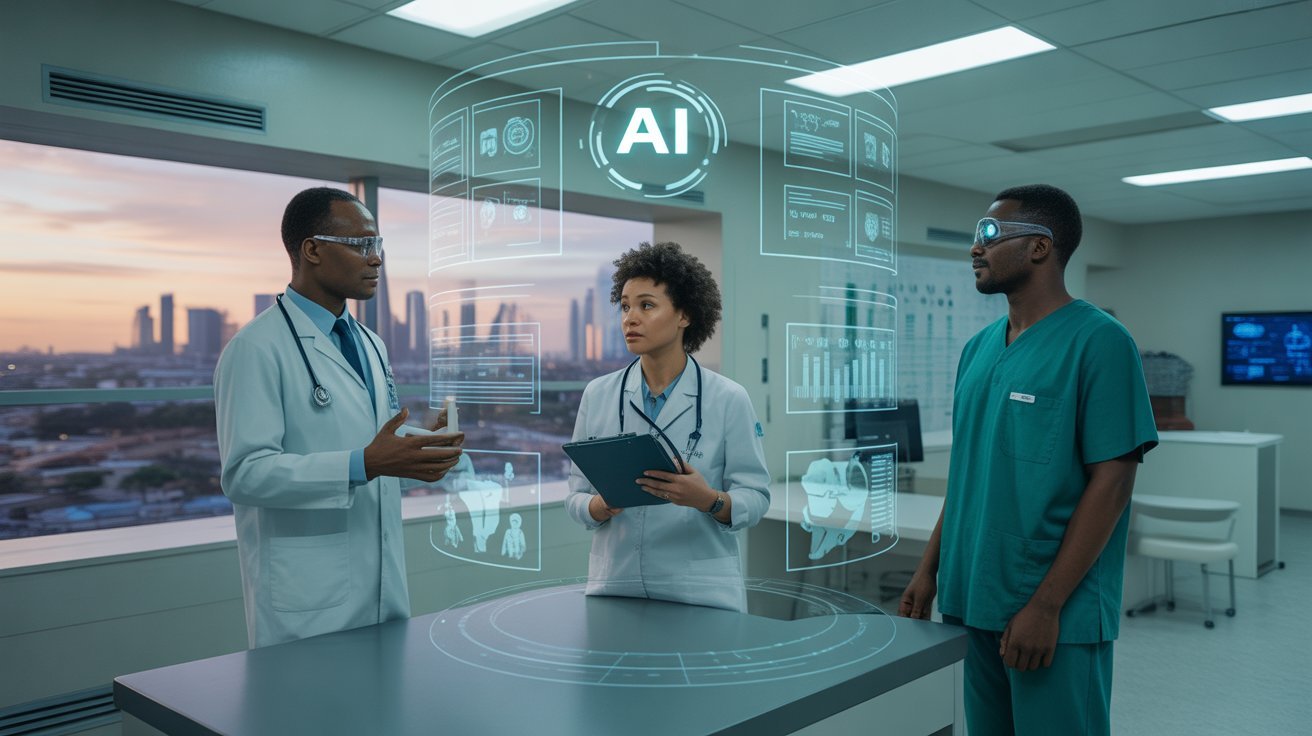

Understanding AI in Healthcare
Artificial Intelligence (AI) refers to the simulation of human intelligence processes by machines, particularly computer systems. In the context of healthcare, AI encompasses a variety of technologies designed to facilitate tasks ranging from diagnosis and treatment planning to administrative processes and patient management. Key concepts associated with AI in healthcare include machine learning, natural language processing, and robotics, each contributing uniquely to the overall efficiency and effectiveness of medical services.
Machine learning, a subset of AI, enables systems to learn from data patterns and improve over time without explicit programming. In Nigerian hospitals, this technology can analyze vast amounts of patient data to identify trends, ultimately aiding healthcare professionals in making informed decisions. Natural language processing allows for the interpretation of human language, enabling AI systems to understand and process patient records and interactions, which streamlines communication between patients and healthcare providers.
Robotics, another essential aspect of AI, plays a significant role in performing intricate surgeries and assisting hospital staff with routine tasks. The incorporation of AI-driven robots can enhance precision during delicate operations, thereby improving patient outcomes. Beyond clinical applications, AI also supports healthcare administration by optimizing scheduling, managing patient flow, and handling billing processes, which can lead to reduced wait times and increased patient satisfaction.
By integrating AI into healthcare practices, Nigerian hospitals stand to benefit from enhanced operational efficiency, improved diagnostics, and a more personalized patient experience. As the healthcare landscape evolves, the potential for AI to enhance patient care becomes ever more critical. Understanding these technological advancements is vital for stakeholders in the Nigerian healthcare system as they seek to improve the quality of care provided to patients across the nation.
Current AI Technologies Transforming Patient Care in Nigeria
In recent years, the integration of artificial intelligence (AI) technologies in Nigerian hospitals has markedly transformed the landscape of patient care. Among the most notable innovations are robotic surgery systems, AI diagnostic tools, and sophisticated patient management systems, each contributing substantially to improved healthcare service delivery.
Robotic surgery systems represent a significant advancement in clinical procedures, allowing for minimally invasive surgeries with enhanced precision. These systems facilitate intricate operations by enabling surgeons to perform complex tasks with greater accuracy and less risk of infection. For instance, hospitals in Nigeria have adopted robotic arms that assist in surgeries such as prostatectomies and hysterectomies, ultimately leading to shorter recovery times for patients and improved surgical outcomes.
AI diagnostic tools have revolutionized the ability to accurately assess patient conditions through advanced imaging and data analysis. Machine learning algorithms analyze medical images such as X-rays, MRIs, and CT scans, assisting healthcare professionals in detecting anomalies that may not be immediately evident. For example, Nigerian hospitals are utilizing AI solutions that can identify early-stage cancers, thereby facilitating timely interventions that improve prognoses for patients.
Furthermore, patient management systems powered by AI are streamlining administrative tasks and enhancing patient experience. These systems utilize predictive analytics to forecast patient needs, manage appointments, and allocate resources efficiently. By analyzing historical data and current trends, Nigerian hospitals can better predict admissions and optimize staffing levels, which leads to reduced wait times and a more organized patient flow.
The synergy of these AI technologies in medical settings not only boosts logistical efficiency but also enhances overall patient outcomes, illustrating the profound impact of artificial intelligence on the healthcare sector in Nigeria. As these technologies continue to evolve, they hold the potential to further elevate the standards of patient care across the nation.
Challenges and Barriers to AI Adoption in Nigerian Hospitals
The adoption of artificial intelligence (AI) technologies in Nigerian hospitals encounters several challenges and barriers that hinder its effective implementation. One primary issue revolves around inadequate infrastructure. Many healthcare facilities in Nigeria lack the necessary technological advancements and reliable internet connectivity required to support AI solutions. This deficiency in infrastructure can significantly impact the integration of AI into existing health systems, leading to inefficient patient care.
Another challenge pertains to the need for staff training. The successful implementation of AI tools relies heavily on healthcare professionals who are well-versed in their use and functionality. Unfortunately, there exists a considerable gap in the current skill set of healthcare workers when it comes to AI applications. Without adequate training and continuous education, medical staff may feel overwhelmed or resistant towards adopting AI technologies, affecting their willingness to integrate these innovations into their daily practice.
Regulatory hurdles add another layer of complexity to the adoption of AI in Nigerian hospitals. The absence of clear guidelines and regulations regarding the use of artificial intelligence in healthcare can deter hospitals from fully embracing these technologies. Stakeholders need assurance that AI systems comply with existing healthcare standards and that patient safety is prioritized. Without a robust regulatory framework, healthcare providers may hesitate to invest in AI solutions.
Moreover, financial constraints represent a significant barrier to AI adoption. Many hospitals in Nigeria operate with limited budgets, making it challenging to allocate resources for the acquisition of advanced technologies. These financial limitations can stall the progress of AI-driven initiatives, hindering the potential benefits that could enhance patient care.
Finally, misconceptions surrounding AI in healthcare can also impede its acceptance. Healthcare professionals may harbor unfounded fears regarding job displacement or the reliability of AI systems. Addressing these myths is crucial for encouraging the integration of AI into Nigerian healthcare, fostering a more collaborative approach to patient management and care.
The Future of AI in Enhancing Patient Experience: Opportunities for Nigerian Hospitals
The future of artificial intelligence (AI) in Nigerian healthcare presents a myriad of opportunities aimed at enhancing patient care and experience. As not only a transformative technology but also a tool for improving operational efficiencies, AI can significantly address critical challenges facing the healthcare system in Nigeria. With a growing emphasis on patient-centered care, Nigerian hospitals are positioned to reap the benefits of AI by integrating solutions such as predictive analytics, natural language processing, and machine learning into everyday operations.
Investment in AI technologies can facilitate significant advancements in personalized treatment plans, where algorithms analyze patient data to recommend the most effective interventions. This not only enhances the quality of care but also streamlines the treatment process, thereby fostering a better patient experience. Moreover, AI-enabled chatbots and virtual assistants can tackle frequently asked questions, schedule appointments, and provide health information, thereby easing the administrative burden on healthcare personnel while enhancing patient interaction.
Collaboration between the public and private sectors is crucial in realizing these opportunities. Initiatives that promote public-private partnerships can accelerate AI development in hospitals while attracting funding and expertise. Case studies from countries like the United States and the United Kingdom illustrate how AI applications have successfully driven innovation in healthcare, improving diagnosis accuracy and patient outcomes. For instance, AI tools that assist in analyzing medical images have reduced diagnostic errors and improved treatment timelines. Such implementations provide a framework for how Nigeria can adopt similar strategies to boost its healthcare delivery.
Furthermore, local innovations should be encouraged, leveraging indigenous knowledge alongside cutting-edge AI technologies to tackle unique health challenges faced in Nigeria. The optimism surrounding AI’s role in healthcare is not unfounded; with proper investment and strategic collaboration, Nigerian hospitals can significantly enhance patient experience and care quality, ensuring a healthier future for all citizens.