Introduction to AI in Healthcare
Nigeria’s healthcare system is characterized by numerous challenges, including limited access to quality medical services, a shortage of skilled healthcare professionals, inadequate infrastructure, and a high burden of disease. These issues are compounded by a rapidly growing population, which places additional strain on an already overworked system. In light of these difficulties, there is an urgent need to explore innovative solutions that can enhance healthcare delivery and improve patient outcomes across the country.
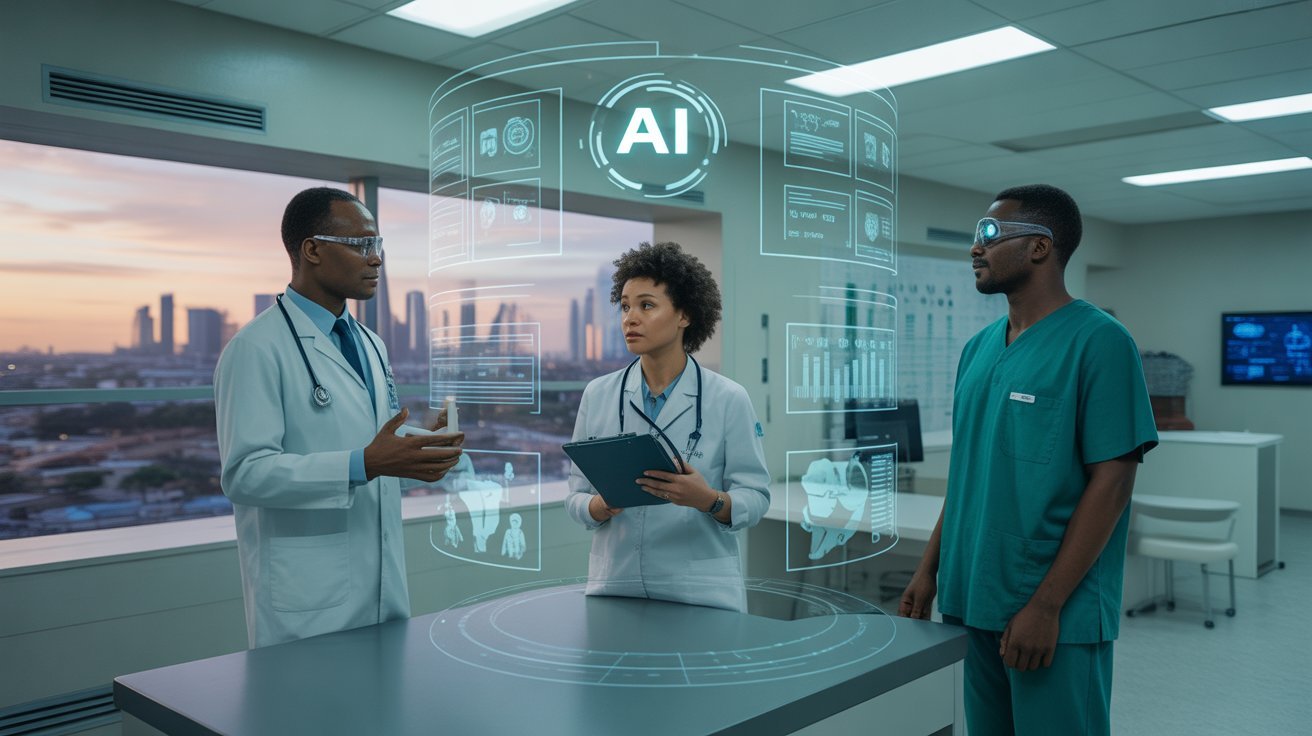
Artificial intelligence (AI) has emerged as a transformative technology in various sectors, including healthcare. AI encompasses a range of computational techniques that enable machines to perform tasks typically associated with human intelligence, such as problem-solving, learning, and decision-making. By integrating AI into the healthcare sector, Nigeria has the potential to address some of the pressing challenges it faces. For instance, AI can facilitate improved diagnostics, streamline administrative processes, and enhance patient management.
In particular, machine learning algorithms can analyze vast amounts of data from medical records, enabling healthcare providers to identify patterns and predict patient outcomes effectively. Additionally, AI-powered tools can assist in disease surveillance, offering real-time insights that can enhance public health responses. The implementation of AI technologies not only holds the promise of optimizing existing resources but also empowers healthcare professionals to make informed decisions based on data-driven insights.
Furthermore, AI serves as a bridge to overcome geographical barriers in accessing healthcare. Telemedicine solutions, augmented by AI, allow patients in remote areas to connect with specialists, thus expanding the reach of quality medical care. The convergence of AI and healthcare in Nigeria represents a critical evolution necessary for modernizing the sector and ultimately improving healthcare outcomes for all citizens.
Successful AI Implementations in Nigerian Healthcare
Nigeria’s healthcare landscape has witnessed significant enhancements through the adoption of artificial intelligence (AI) technologies. These advancements have transformed various aspects of patient care and resource management within hospitals and clinics, ultimately leading to improved health outcomes. Notably, AI-driven diagnostic tools have become integral in identifying diseases more accurately and efficiently. For instance, a notable case study involves a collaboration between a Nigerian health institution and a tech startup, where an AI-based platform was developed to analyze medical images. This system demonstrated an ability to identify conditions such as tuberculosis and pneumonia with a considerably higher precision than traditional methods, thereby reducing the time required for diagnosis and initiating treatment sooner.
Telemedicine platforms have also emerged as a vital application of AI in healthcare. During the COVID-19 pandemic, many hospitals adopted AI-powered telehealth solutions to facilitate remote consultations. An illustrative example is a platform that employed machine learning algorithms to triage patients based on their symptoms. This allowed healthcare providers to prioritize cases that required immediate attention, thus optimizing patient flow and reducing overcrowding in facilities. These adaptations not only increased accessibility for patients in rural areas who may have otherwise faced barriers to receiving care but also enhanced the efficiency of healthcare delivery during a crisis.
Additionally, predictive analytics have played a crucial role in managing resources effectively. By analyzing historical health data, AI systems can forecast patient admission rates and anticipate resource needs, such as staffing and medication supplies. Hospitals that implemented these predictive tools reported a reduction in wait times and improved overall service delivery, particularly in emergency care settings. These successful AI implementations underscore the profound impact of technology on the Nigerian healthcare system, presenting a promising pathway towards achieving sustainable healthcare improvements and better patient care outcomes.
Challenges and Limitations of AI in Nigeria
The integration of artificial intelligence (AI) into the Nigerian healthcare system presents several challenges and limitations that must be addressed to optimize its potential benefits. One significant issue is the inadequacy of infrastructure. Many healthcare facilities in Nigeria struggle with inconsistent access to electricity, unreliable internet connectivity, and outdated hardware, which can hinder the implementation of advanced AI solutions. Without a robust infrastructure, the effectiveness and reliability of AI technologies in diagnosing and treating patients become compromised.
Another critical concern is related to data privacy. The collection and usage of patient data are essential for AI systems to function effectively. However, the lack of stringent data protection regulations increases the risk of data breaches and misuse. Patients may be hesitant to share their health information due to fears related to confidentiality and security. Consequently, this reluctance can lead to gaps in the data necessary for training AI algorithms, ultimately impacting the accuracy and effectiveness of AI applications in healthcare.
The shortage of skilled professionals in both healthcare and technology sectors poses another barrier to successful AI integration. Nigeria faces a significant skills gap, often lacking individuals who possess the expertise required for AI system development, deployment, and maintenance. This deficiency limits the ability to harness AI’s full potential within the healthcare system and ultimately affects patient care outcomes.
Moreover, resistance to change from within medical institutions has emerged as a substantial hurdle. Many healthcare professionals may be skeptical about adopting AI technologies, preferring traditional methods over AI-based solutions. Overcoming this resistance necessitates comprehensive education and training programs designed to increase awareness of AI’s advantages, thereby fostering a more conducive environment for technological innovation in healthcare.
The Future of AI in Nigerian Healthcare
The future of artificial intelligence (AI) in Nigeria’s healthcare sector holds significant promise, with the potential to enhance healthcare outcomes substantially. As technology continues to advance, there is ample opportunity for AI-driven innovations to improve diagnostic accuracy, streamline patient management, and personalize treatment plans. These advancements are expected to be transformative, addressing some of the pressing health challenges faced by the Nigerian population.
Investment in AI technologies remains a critical factor for the growth of this sector. Both government and private entities are encouraged to explore funding opportunities that facilitate the research and development of AI solutions tailored to local healthcare needs. Public-private partnerships can serve as a foundational strategy, pooling resources and expertise to drive innovation. Such collaborations could lead to the emergence of startups focused on AI applications, which in turn can stimulate job creation and economic growth.
Furthermore, the role of government in shaping a supportive regulatory framework cannot be overstated. Establishing clear guidelines and policies regarding the use of AI in healthcare will encourage healthcare providers and investors to adopt these technologies with confidence. Moreover, national initiatives aimed at developing an AI-friendly infrastructure will pave the way for an ecosystem where technology and healthcare can seamlessly integrate.
Education plays a vital role in this transition. Increasing awareness and providing training for healthcare professionals about AI tools will equip them to leverage these technologies effectively. Similarly, educating citizens on the benefits of AI in healthcare will foster a more receptive environment for innovation. As the society becomes more informed, professionals and patients alike will be empowered to embrace the transformations AI can bring, ultimately leading to improved health outcomes across Nigeria.