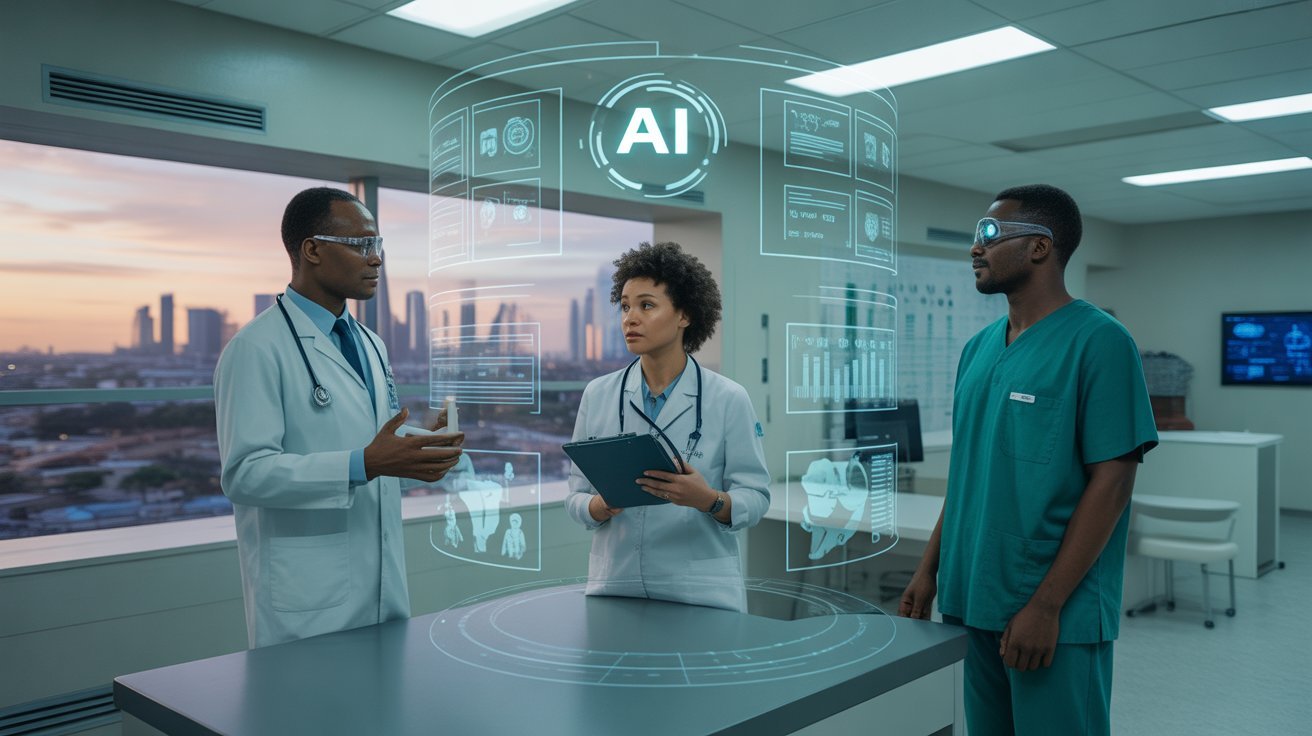
Understanding AI and its Role in Healthcare
Artificial intelligence (AI) refers to the development of computer systems capable of performing tasks that typically require human intelligence. These tasks include problem-solving, learning, understanding natural language, and recognizing patterns. In the healthcare sector, AI has emerged as a transformative force, enhancing various processes ranging from disease detection to patient treatment. AI technologies, particularly machine learning algorithms, are designed to analyze vast amounts of data quickly and efficiently. This capability allows healthcare professionals to make informed decisions that can significantly improve patient outcomes.
One of the primary applications of AI in healthcare is its ability to improve disease detection. By analyzing medical images, such as X-rays, MRIs, and CT scans, AI systems can identify abnormalities with remarkable accuracy. This level of precision not only aids in diagnosing conditions early but also reduces the likelihood of misdiagnosis. Moreover, AI can process electronic health records and other patient data to identify risk factors associated with specific diseases, enabling healthcare providers in Nigeria to tailor preventive measures for at-risk populations.
In addition to detection, AI technologies are playing a crucial role in treatment methodologies. For instance, personalized medicine—where treatment plans are customized based on individual genetic profiles—is becoming increasingly feasible through AI’s advanced data analytics capabilities. By leveraging algorithms that assess patient genetics, medications, and historical data, healthcare professionals can devise more effective treatment strategies. Thus, integrating AI within the existing healthcare framework in Nigeria stands to enhance service delivery, streamline processes, and ultimately lead to better health outcomes for patients.
Current Challenges in Disease Detection and Treatment in Nigeria
Nigeria’s healthcare system is confronted with a myriad of challenges that significantly impair disease detection and treatment. One of the most pressing issues is the limited access to healthcare facilities, particularly in rural areas. For a large portion of the population, distances to the nearest medical centers can span considerable lengths, deterring individuals from seeking timely medical attention. This geographical barrier leads to late-stage diagnoses of diseases that could otherwise be treated effectively if detected early.
In addition to accessibility issues, the healthcare system in Nigeria suffers from a lack of resources. Many healthcare facilities are underfunded and operate with insufficient medical equipment and supplies, which severely restricts their ability to conduct accurate diagnostic procedures. This scarcity of resources not only creates a bottleneck in disease detection but also poses significant risks in disease management, as patients may receive inadequate or inappropriate treatments due to misdiagnosis or delayed diagnosis.
Moreover, the diagnostic tools available in many Nigerian healthcare facilities are often inadequate and sometimes outdated. The reliance on traditional methods and limited access to advanced diagnostic technologies further hinders effective disease detection. Consequently, prevalent diseases such as malaria, tuberculosis, and HIV/AIDS are often misdiagnosed or diagnosed late, exacerbating the health crisis in the country. This situation not only impacts individual health outcomes but also poses a considerable burden on the overall healthcare system.
The combined effect of dwindling resources, limited access to healthcare, and inadequate diagnostic tools fosters an environment where disease management is challenged, leading to increased morbidity and mortality rates. Understanding these challenges lays a critical foundation for exploring the role of artificial intelligence (AI) in revolutionizing disease detection and treatment strategies in Nigeria.
AI Solutions Transforming Disease Detection and Treatment
The integration of artificial intelligence (AI) technologies into healthcare systems holds immense promise for enhancing disease detection and treatment in Nigeria. Various innovative solutions are being deployed, reflecting a significant shift towards data-driven healthcare. One noteworthy development is the emergence of AI-based diagnostic tools, which utilize machine learning algorithms to analyze medical images, enabling faster and more accurate diagnoses. For example, certain AI applications are now able to detect conditions such as tuberculosis and malaria from chest X-rays and blood samples, respectively, often surpassing human accuracy levels.
Telemedicine platforms represent another crucial area where AI is making strides. These platforms leverage AI analytics to evaluate patient data remotely, facilitating consultations between healthcare providers and patients in rural areas. This not only improves access to medical care but also allows for quicker diagnosis and treatment interventions, which is especially vital in a country facing healthcare infrastructure challenges. An illustrative case study from Nigeria shows how a telemedicine initiative enabled continuous monitoring of chronic disease patients, showcasing increased adherence to treatment protocols and improved health outcomes.
Furthermore, predictive analytics aids public health officials in outbreak management by analyzing trends in disease outbreaks and identifying potential hotspots. Utilizing AI models, Nigeria has begun implementing systems that forecast flu trends and potential epidemic outbreaks based on historical data and social media trends, allowing for timely resource allocation and public health responses. Personalized medicine, which tailors treatment approaches based on individual genetic profiles and health data, is also gaining traction, promising to improve therapeutic outcomes for various diseases.
From AI-based diagnostics to telemedicine and predictive analytics, the integration of these technologies into Nigeria’s healthcare landscape is transforming disease detection and treatment methodologies. These advancements underscore the potential of AI to address existing healthcare disparities and enhance patient care throughout the nation.
The Future of AI in Nigerian Healthcare: Opportunities and Considerations
The integration of artificial intelligence (AI) in Nigerian healthcare presents a plethora of opportunities that could significantly transform the sector. One of the most promising prospects is enhanced access to healthcare services, particularly in rural areas. By leveraging AI-driven telemedicine platforms, healthcare providers can reach patients who may otherwise face geographical and logistical barriers to receiving timely medical attention. Furthermore, AI systems can streamline administrative tasks, thereby increasing efficiency within healthcare facilities and allowing practitioners to dedicate more time to patient care.
Moreover, partnerships between technology companies and healthcare providers are likely to pave the way for innovative solutions tailored to meet the unique needs of Nigeria’s diverse population. Such collaborations can facilitate the development of AI algorithms designed specifically for local health challenges, thereby improving diagnostic accuracy and treatment outcomes. The synergy between cutting-edge technology and local expertise can enable the creation of customized healthcare solutions that cater to the prevalence of diseases endemic to the region.
However, with the promising prospects come important considerations, particularly concerning ethical practices and data privacy. The implementation of AI in healthcare raises questions about the security of sensitive patient data and the ethical use of algorithms in clinical decision-making. Ensuring transparent data usage policies and establishing strict guidelines for AI applications are essential steps toward building trust in these emerging technologies.
Lastly, enhancing the education and training of healthcare professionals is crucial for the successful adoption of AI technologies. Developing a workforce skilled in interpreting AI insights will empower practitioners to integrate these tools effectively within clinical practices. The future of healthcare in Nigeria, therefore, leans on a collaborative approach where technology, ethics, and education coalesce to revolutionize disease detection and treatment.