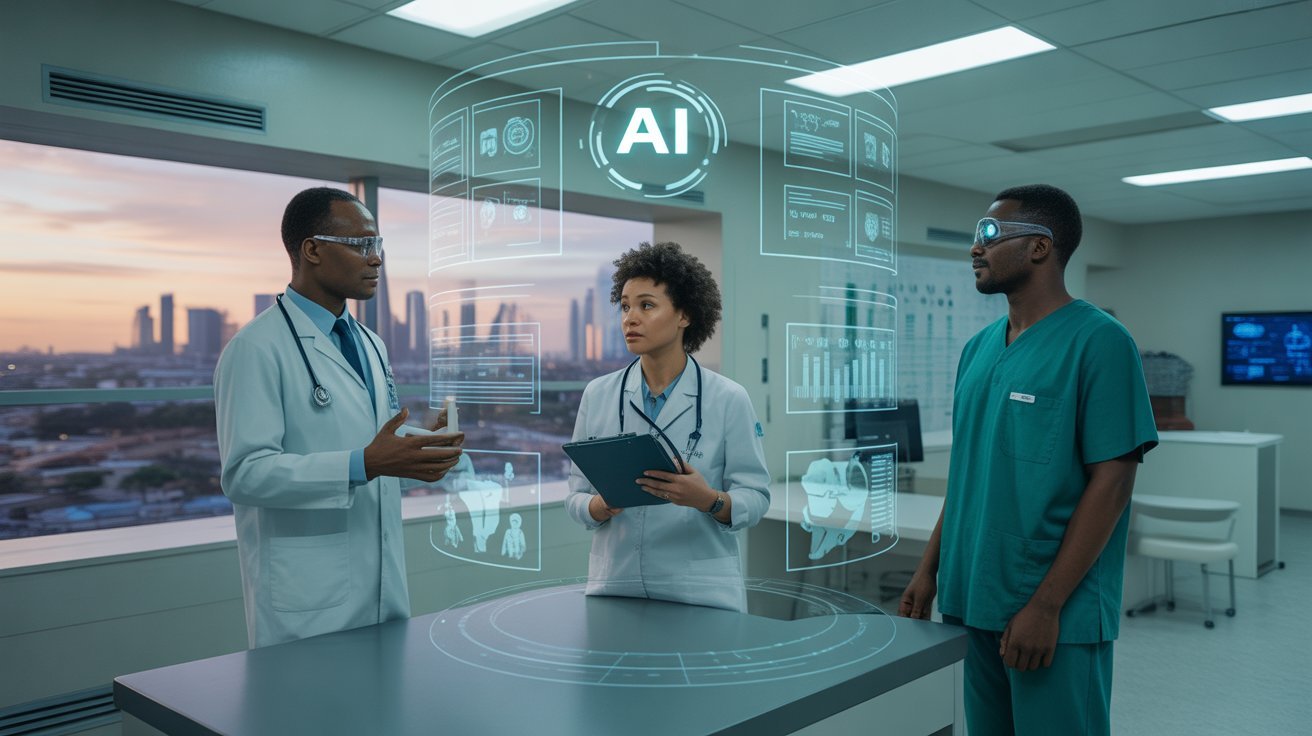
Understanding AI and Its Applications in Healthcare
Artificial Intelligence (AI) refers to the simulation of human intelligence in machines programmed to think and act like humans. The foundational concepts of AI include machine learning, where algorithms enable computers to learn from data; natural language processing (NLP), which allows machines to understand and interpret human language; and robotics, which enhances automation in various tasks. Each of these technologies plays a vital role in transforming healthcare, paving the way for improved patient outcomes and experiences.
In diagnostics, AI algorithms analyze medical images to detect anomalies more efficiently than human practitioners in specific cases. For instance, AI systems can identify early-stage cancers in radiological scans with a high degree of accuracy, thereby significantly enhancing early intervention strategies. Furthermore, AI-driven predictive analytics can assess patient data to forecast the likelihood of complications, allowing healthcare providers to implement preventative measures proactively.
Another essential application of AI in healthcare is treatment planning. By synthesizing vast amounts of clinical and genetic data, AI can assist physicians in creating personalized treatment plans tailored to individual patients. These AI systems provide recommendations based on evidence derived from previously successful cases, thus optimizing therapeutic outcomes while minimizing potential side effects.
Additionally, AI enhances patient management by streamlining administrative tasks and improving communication. Chatbots powered by natural language processing can efficiently handle patient inquiries, schedule appointments, and provide 24/7 support without overwhelming healthcare staff. Moreover, AI technology can monitor patients remotely, enabling timely interventions in cases of health deterioration, thus fostering a more proactive approach to managing chronic diseases.
Overall, AI technologies are transforming the healthcare landscape, with their diverse applications significantly improving patient care, operational efficiency, and medical practices. By integrating AI into healthcare systems, the industry stands to realize an unprecedented enhancement in both patient outcomes and experiences.
Enhancing Patient Outcomes Through AI Technologies
Artificial intelligence (AI) is revolutionizing the healthcare sector, particularly in enhancing patient outcomes. One of the primary ways AI contributes to this is through predictive analytics, which allows healthcare providers to assess the risk factors of individual patients more effectively. By analyzing large datasets, AI algorithms can identify patterns and predict potential health issues before they manifest. For instance, a study published in a leading medical journal showed that predictive analytics could accurately identify patients at high risk for readmission, allowing for timely interventions that significantly reduced hospital readmission rates.
AI-driven personalized medicine represents another significant advancement in improving patient outcomes. This approach tailors treatment plans based on a patient’s genetic makeup, lifestyle, and preferences. By leveraging AI algorithms, clinicians can analyze data from genomics and other sources to recommend specific therapies that are more likely to be effective for individual patients. For instance, oncology patients have shown increased survival rates when treated with personalized medication based on AI analysis rather than standard treatment protocols.
Real-time monitoring through wearable devices is also playing a crucial role in AI’s impact on patient outcomes. These devices collect valuable health data continuously, enabling healthcare professionals to track changes in patient health in real time. An illustrative case study revealed that diabetic patients using AI-integrated wearables experienced better glycemic control compared to those relying on traditional monitoring methods. This technological advancement not only empowers patients in managing their conditions but also allows providers to intervene promptly when needed.
Additionally, advancements in advanced imaging technology supported by AI algorithms lead to improved diagnostic accuracy. AI systems can analyze medical images with precision, reducing the likelihood of misdiagnosis. A report from a recent conference highlighted that AI-assisted radiology improved the detection rates of critical conditions such as tumors, leading to earlier treatment and better patient outcomes.
Through these innovations, AI is not only enhancing diagnostic capabilities but is also improving overall patient health and satisfaction. The integration of AI technologies in healthcare settings represents a transformative shift aimed at ensuring a better quality of care for patients.
Transforming Patient Experience with AI Solutions
The integration of artificial intelligence (AI) in healthcare is profoundly transforming the patient experience, making healthcare services more accessible, responsive, and user-friendly. Virtual health assistants are among the most notable innovations, providing patients with immediate answers to their queries and guiding them through various healthcare processes. These AI-driven tools can simplify appointment scheduling, medication reminders, and even symptom assessments, thereby enhancing the overall convenience for patients.
Chatbots are another significant advancement, facilitating streamlined communication between patients and healthcare providers. By automating responses to common inquiries and managing patient follow-up, chatbots not only reduce the burden on healthcare staff but also ensure that patients receive timely information regarding their health concerns. This level of quick and efficient communication plays a crucial role in improving patient satisfaction, as individuals no longer have to endure lengthy wait times for basic information.
Telemedicine platforms, powered by AI, have revolutionized the way patients access healthcare. These platforms enable remote consultations, allowing patients to connect with healthcare professionals from the comfort of their homes. This accessibility is especially beneficial for individuals in rural or underserved areas, who may struggle to reach medical facilities. By providing timely support and reducing the need for in-person visits, telemedicine has proven crucial in enhancing the patient experience.
Moreover, AI-enhanced appointment scheduling systems help minimize wait times and improve the flow of patient visits. By analyzing data and predicting patient volumes, these systems can optimize scheduling, ensuring that healthcare facilities operate efficiently. Consequently, patients can expect more reliable appointment timings, leading to less frustration and smoother visits. Overall, the application of AI in improving patient experience represents a significant step toward more effective and tailored healthcare services.
Challenges and Future Outlook of AI in Healthcare
The integration of artificial intelligence (AI) in the healthcare sector promises significant advancements in patient care, yet it also faces several substantial challenges. One of the most pressing issues is data privacy. With healthcare data being highly sensitive, ensuring the protection of patient information is paramount. Regulatory bodies are scrutinizing AI systems to guarantee compliance with data protection laws, highlighting the necessity for robust frameworks that prioritize patient confidentiality while leveraging AI technologies.
Another challenge lies in the need for high-quality, representative training data. AI algorithms depend on vast datasets to learn and make accurate predictions. If these datasets are incomplete or biased, the resulting AI systems can perpetuate existing disparities in healthcare outcomes. Thus, it is crucial that the data used for training these models reflect diverse populations to minimize bias and enhance generalizability.
Additionally, regulatory considerations play a significant role in the adoption of AI in healthcare. As the technology evolves, so too must the regulatory frameworks that govern its use. Policymakers and health regulators must work together to establish guidelines that not only ensure patient safety but also promote innovation. Collaboration between technology developers and healthcare professionals is essential to foster a comprehensive understanding of AI applications, limitations, and ethical implications.
Looking to the future, the potential of AI in healthcare remains promising. Several innovations are emerging that could further transform patient experiences and outcomes, such as AI-driven diagnostic tools, personalized treatment plans, and virtual health assistants. However, realizing this potential necessitates addressing the current challenges head-on. A balanced approach that acknowledges both the opportunities and hurdles will be crucial for the successful integration of AI into the healthcare system, ultimately enhancing service delivery and improving patient care.