Understanding AI in Healthcare
Artificial intelligence (AI) has emerged as a transformative force in multiple sectors, with healthcare being one of its most promising fields. At its core, AI refers to the simulation of human intelligence processes by computer systems. These processes include learning (machine learning), reasoning, and self-correction. Machine learning, a subset of AI, enables systems to learn from data and improve their accuracy over time without being explicitly programmed. This technology is particularly beneficial in healthcare for predicting patient outcomes and personalizing treatment plans.
Another essential component of AI in healthcare is natural language processing (NLP). This technology allows machines to interpret and respond to human language in a valuable manner. For instance, NLP can enhance clinical documentation and enable healthcare providers to extract meaningful insights from unstructured data, such as electronic health records (EHRs). By streamlining this process, healthcare practitioners can focus more on patient care rather than paperwork.
Data analytics is another critical element in the utilization of AI in healthcare. It involves analyzing vast amounts of data to uncover patterns and trends that can inform decision-making. For example, AI-powered analytics tools can assist in early disease detection and diagnosis by examining medical images or lab results more accurately than traditional methods. Such capabilities not only improve diagnostic precision but also enhance treatment strategies tailored to individual patient needs.
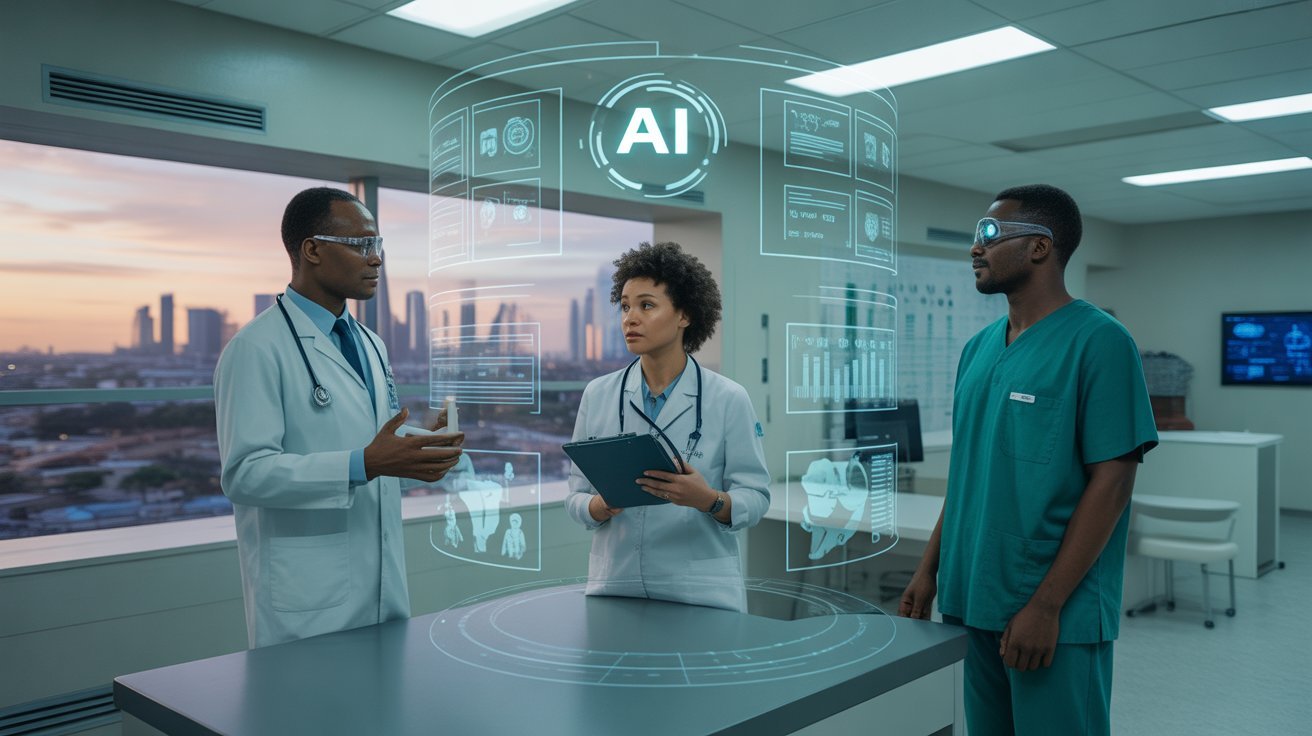
AI technologies are already being employed in various domains within healthcare. In diagnostics, AI algorithms can analyze radiology images and identify abnormalities with remarkable accuracy. In patient care, virtual health assistants powered by AI can provide timely information and support to patients, allowing for improved engagement and adherence to treatment plans. Furthermore, AI contributes to administrative efficiency by optimizing scheduling and managing resources effectively. Through these applications, AI stands to revolutionize healthcare delivery and outcomes, fostering a healthier future.
Opportunities Presented by AI in Healthcare
The integration of artificial intelligence (AI) in healthcare represents a transformative paradigm shift, unlocking numerous opportunities for improving patient outcomes and operational efficiencies. One of the prominent benefits of AI is the potential for personalized medicine. By analyzing vast amounts of patient data, AI algorithms can identify individual health patterns and tailor treatments accordingly. This approach not only enhances the effectiveness of interventions but also minimizes potential side effects, fostering a more patient-centered healthcare environment.
Additionally, AI can streamline healthcare operations through automation. Routine administrative tasks, such as appointment scheduling, patient data entry, and billing processes, can be efficiently managed by AI systems, allowing healthcare professionals to devote more time to direct patient care. This operational efficiency can reduce costs and waiting times, thus making healthcare services more accessible to a broader population.
Moreover, AI contributes significantly to enhanced decision-making in clinical settings via predictive analytics. By leveraging historical patient data and trends, AI can assist healthcare providers in making informed decisions about diagnoses, treatment options, and care plans. For example, machine learning models have been successfully used to predict disease outbreaks and patient readmission rates, enabling timely interventions that improve overall health outcomes.
Real-world examples underscore the power of AI in healthcare. In regions like Africa, AI applications are bridging gaps in healthcare delivery, where resources may be scarce. Innovations such as mobile health applications powered by AI are helping local health workers screen for diseases, track patient health, and provide education, significantly impacting community health. By overcoming traditional barriers and leveraging technology, AI holds the promise of elevating healthcare standards across various regions, paving the way for a healthier future.
Challenges and Ethical Considerations of AI in Healthcare
As artificial intelligence (AI) integrates into healthcare systems, various challenges and ethical considerations arise that must be addressed to ensure its effective and responsible implementation. One of the foremost issues is data privacy. AI systems require access to vast amounts of personal health information to function effectively. This raises concerns regarding how patient data is collected, stored, and utilized. Healthcare providers must adhere to strict regulations to safeguard sensitive information, as breaches could lead to significant harm, including identity theft and loss of trust in medical institutions.
Another major concern is the potential for bias in AI algorithms. If the datasets used to train these systems are not representative of diverse populations, the risk of perpetuating existing disparities in care increases. Bias in AI can lead to inaccurate diagnoses or suboptimal treatment recommendations for underrepresented groups. Therefore, it is crucial for developers and healthcare professionals to actively work towards creating robust, inclusive datasets that ensure equitable access to AI-driven solutions, particularly in African contexts where healthcare disparities are pronounced.
The cost of technology deployment also presents a considerable challenge. Implementing AI solutions often requires substantial financial investment in both technology and workforce training. Many healthcare facilities, particularly in low- and middle-income countries, may struggle to allocate the necessary resources to integrate sophisticated AI systems, exacerbating existing inequalities. Additionally, a skilled workforce is required to operate and maintain these technologies; hence, investing in education and training is vital for maximizing the benefits of AI in healthcare.
Finally, the implications of AI on doctor-patient relationships warrant careful consideration. As AI takes on more significant roles in diagnostics and treatment planning, the nature of human interaction may evolve. Maintaining the integrity of the doctor-patient relationship is essential, as trust and empathy remain core components of effective healthcare. Thus, a balanced approach that employs AI as a supportive tool rather than a replacement for human interaction is imperative for fostering a compassionate healthcare environment.
The Future of AI in Healthcare: Moving Forward
The future of artificial intelligence (AI) in healthcare promises to be transformative, as advancements in technology pave the way for innovative solutions that address longstanding challenges within the industry. One of the most significant anticipated trends is the continued integration of AI systems with existing healthcare infrastructures, enhancing efficiency and improving patient outcomes. This progression necessitates a collaborative approach among various stakeholders, including governments, technology firms, healthcare providers, and patients, to facilitate a seamless adoption of these advancements.
Governments play a critical role in establishing regulatory frameworks that encourage innovation while ensuring patient safety and ethical considerations are met. By actively investing in research and development, authorities can cultivate an environment conducive to AI breakthroughs. Similarly, tech companies must prioritize partnerships with healthcare providers to develop tailored AI solutions that address specific industry needs. This partnership will foster a collaborative spirit that enhances the capabilities of AI tools, ultimately leading to improved diagnostics, personalized treatment plans, and efficient resource management.
Additionally, patients should engage in dialogues concerning AI applications in their healthcare journey. By understanding and advocating for AI-driven solutions, patients can play a pivotal role in shaping the services they receive. To that end, education and awareness initiatives provide essential knowledge about AI technologies, empowering individuals to make informed health decisions.
For business owners and educators in Africa, leveraging the power of AI can significantly benefit local communities. Adopting AI software tools for data analysis, patient management, and health monitoring can enhance operational efficiency for healthcare providers. Educators should incorporate AI education into curricula to prepare the next generation of healthcare professionals equipped to utilize these emerging technologies effectively. By embracing AI, Africa can strengthen its healthcare systems, fostering innovation and improving the quality of care for its population.