Understanding AI and Its Importance
Artificial intelligence (AI) has emerged as a transformative force in today’s society, revolutionizing how we approach various sectors such as education, healthcare, and business. At its core, AI refers to the creation of systems capable of performing tasks that typically require human intelligence. These tasks include reasoning, problem-solving, decision-making, and even understanding natural language. As such, AI stands as a pivotal technological advancement, shaping the future of numerous industries.
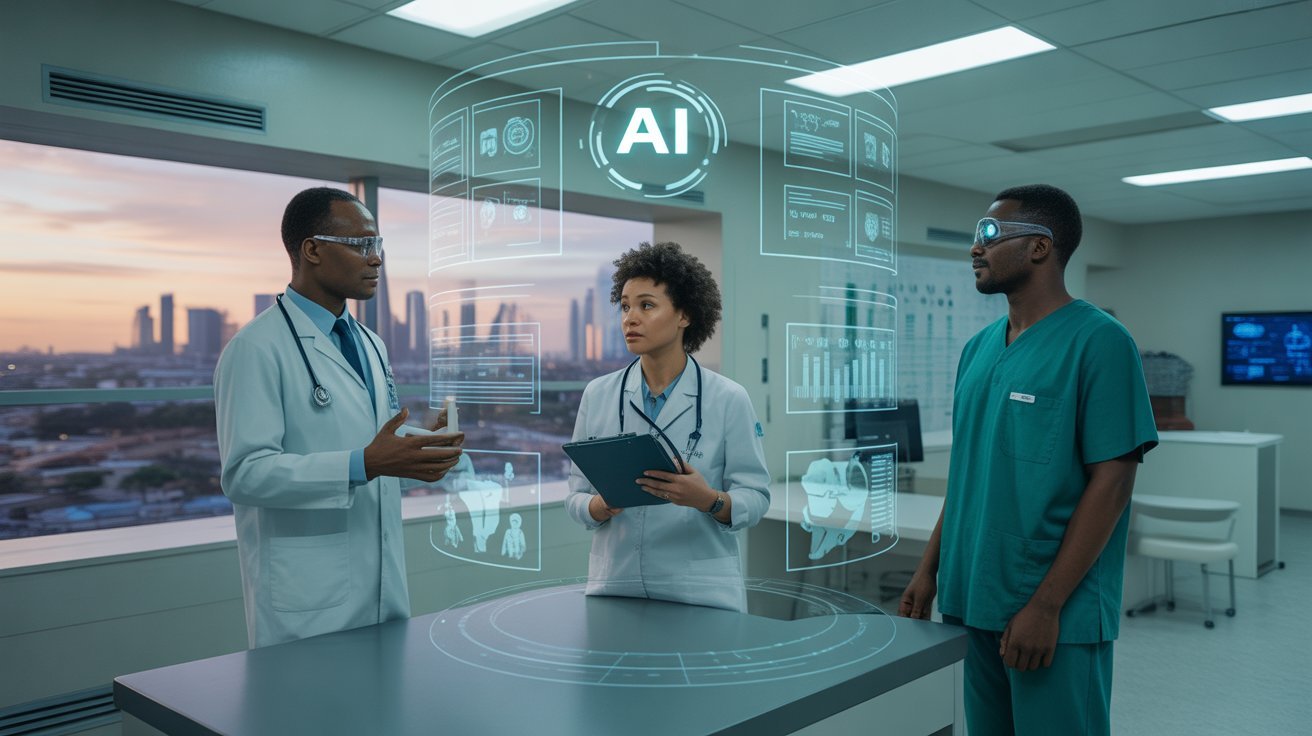
The significance of AI becomes evident when scrutinizing its integration into different sectors. For instance, in healthcare, AI algorithms are harnessed to analyze large datasets, thereby assisting medical professionals in diagnosing diseases more accurately and efficiently. Hospitals in countries such as Nigeria and Kenya are already leveraging AI to enhance patient care, demonstrating that adopting these technologies is not only beneficial but also crucial for improving health outcomes in the region.
In the realm of education, AI-powered tools are redefining learning experiences. These technologies facilitate personalized education, where students can learn at their own pace, adapting to their individual needs and learning styles. In Africa, organizations are employing AI solutions to develop educational programs that target local challenges, thereby improving access to quality education for many.
Furthermore, the business landscape is being drastically altered by AI’s capabilities. Companies are utilizing AI for data analysis, customer engagement, and operational efficiencies. Startups across Africa are integrating AI into their business models, optimizing processes, and enhancing competitiveness in the market. As such, understanding and adopting AI is not merely an option; it has become a necessity for individuals and organizations aiming to thrive in this rapidly evolving digital era.
In light of these transformative impacts, it is imperative for both individual professionals and organizations to comprehend the relevance of AI. As technology continues to advance, those who neglect to engage with AI may find themselves at a significant disadvantage.
The Risks of Ignoring AI in Business
In today’s rapidly evolving marketplace, the reluctance to adopt artificial intelligence (AI) within business operations poses significant risks that cannot be overlooked. Companies that ignore AI integration not only jeopardize their competitive edge but also face tangible and intangible costs that can adversely affect their market positioning.
One of the primary risks associated with neglecting AI is decreased competitiveness. Firms that fail to leverage AI technologies miss out on the opportunity to optimize processes, enhance decision-making, and foster innovation. For instance, a company that does not use AI analytics may struggle to understand customer preferences or market trends, leading to uninformed decisions that can hinder growth and responsiveness. Consequently, competitors who embrace AI can capture more market share by developing products and services more aligned with consumer demands.
Moreover, the lack of AI can lead to diminished customer satisfaction. Automation of customer service through AI-driven chatbots and personalized recommendations enhances the customer experience. Businesses that resist incorporating these technologies often find themselves unable to meet customers’ expectations, resulting in high churn rates. When customer satisfaction declines, the repercussions are often reflected in overall revenue loss, as dissatisfied customers switch to more innovative competitors.
Looking at success stories in AI implementation provides a stark contrast to the risks of inaction. Companies like Amazon and Netflix have used AI not merely as a tool but as a cornerstone of their business strategies, enhancing efficiencies and customer engagement. On the other hand, organizations that have lagged in adopting AI solutions, such as Blockbuster, which failed to innovate in the face of Netflix’s technological advancements, have faced significant operational challenges and operational decline.
In conclusion, the adoption of AI is no longer a luxury but a necessity. Businesses that ignore its potential risks not only face decreased competitiveness and customer dissatisfaction but also risk falling behind in a market that increasingly values innovation and adaptability. The time to act is now—waiting could lead to irreparable consequences.
AI: A Game Changer for Education and Skill Development
The integration of artificial intelligence (AI) in education has emerged as a transformative force that enhances the learning experience considerably. By leveraging AI tools, educational institutions can personalize learning pathways for students, catering to individual needs and preferences. This tailored approach not only aids in boosting engagement but also substantially improves educational outcomes, providing students with the support necessary to thrive in an increasingly complex world.
AI-driven systems can analyze vast amounts of data to identify patterns in students’ learning behaviors and achievements. This enables educators to provide targeted interventions aimed at addressing gaps in knowledge and skills. For instance, adaptive learning platforms can automatically adjust the difficulty level of tasks based on student performance, thus optimizing the learning process. Such personalization fosters an environment where students can progress at their own pace, ultimately facilitating deeper understanding and retention of material.
Furthermore, in an era where technological skills are paramount, AI plays a crucial role in equipping students with future-ready skills. By introducing AI literacy in curricula and pedagogical approaches, educational institutions ensure that students are prepared to navigate a technology-driven economy. The ability to understand AI concepts and applications is becoming increasingly critical for career readiness in various fields, making it essential for both educators and students to embrace AI tools.
Moreover, educators themselves must be equipped with the knowledge and skills to effectively utilize AI in their teaching practices. Implementing AI technologies not only aids in personalizing student learning but also acts as a vital resource for teachers to enhance their instructional methods. Through professional development that focuses on AI’s integration, educators can better support their students in mastering the skills necessary for success in the 21st century.
Taking Action: Steps to Embrace AI Now
As the landscape of technological advancement rapidly evolves, it is crucial for individuals, educators, and business owners in Africa to take decisive action in embracing artificial intelligence (AI). Here are several practical steps that can be taken to get started on this journey.
Firstly, upskilling in AI should be a priority. A wide range of online courses and certifications are available through platforms like Coursera, edX, and Udacity. These resources cover fundamental concepts of AI, machine learning, and data analysis. Individuals can take advantage of community resources such as local workshops or meetups that focus on AI topics. Engaging in these educational opportunities can significantly enhance understanding and readiness to implement AI technologies.
Secondly, businesses and organizations should explore the integration of AI solutions in their operations. This could involve identifying areas where automation can improve efficiency, such as customer service or inventory management. Testing smaller-scale AI tools can provide insights into the potential benefits without the risk of substantial initial investment. Collaborating with local tech startups specializing in AI can also foster innovation and provide fresh perspectives on implementing AI.
Moreover, encouraging a culture of continuous learning and adaptability within organizations is essential. Employees should be motivated to stay updated with current AI trends and innovations. This can be supported by establishing a dedicated team focused on exploring AI applications relevant to the business. Consistent training and open discussions regarding the implications of AI will ensure staff feel prepared to utilize emerging technologies effectively.
Finally, the urgency of embracing AI cannot be overstated. In a rapidly digitizing world, businesses that delay action may find themselves outpaced by competitors who are already leveraging these advanced technologies. It is imperative for individuals and organizations in Africa to recognize the transformative potential of AI and to act promptly to harness its benefits. Staying ahead is not merely advantageous; it is essential for thriving in the modern landscape.