Understanding AI in Healthcare
Artificial Intelligence (AI) has increasingly become a transformative force in the healthcare sector, weaving innovative solutions into various facets of disease diagnosis and prevention. At its core, AI refers to the simulation of human intelligence in machines programmed to think and learn. In healthcare, this technology primarily employs methods like machine learning, neural networks, and robust data analytics to enhance the accuracy and efficiency of medical processes.
Machine learning, a subset of AI, enables systems to learn from and adapt to new data without explicit programming. This capability is vital in clinical settings, where predictive models can analyze vast datasets to identify patterns associated with specific diseases. For instance, machine learning algorithms can assist in predicting the likelihood of a patient developing conditions such as diabetes or heart disease based on historical health data and lifestyle factors.
Neural networks, another critical component of AI, mimic the human brain’s architecture to process complex data inputs. This technology excels in image recognition tasks, which are paramount in radiology and oncology, allowing for the early detection of abnormalities in imaging studies. The integration of neural networks with medical imaging can expedite diagnoses, leading to timely interventions that may alter patient outcomes significantly.
Historically, the application of AI in healthcare has evolved from rule-based systems to sophisticated algorithms capable of self-improvement. Early efforts primarily focused on expert systems designed to assist healthcare professionals in clinical decision-making. As computational power has increased and access to large datasets has become feasible, AI’s role has expanded, enabling more nuanced predictive analytics and personalized medicine approaches. Today, the incorporation of AI not only aids in diagnosis but also plays a significant role in preventive healthcare strategies, shifting the paradigm toward proactive patient management.
AI-Powered Tools for Disease Diagnosis
Artificial Intelligence (AI) has emerged as a transformative force in healthcare, particularly in the realm of disease diagnosis. Several AI-powered tools and technologies are currently in use, enabling healthcare professionals to analyze medical data with unprecedented levels of accuracy and efficiency. Notable applications include AI algorithms for analyzing medical imaging, such as X-rays, MRIs, and CT scans, which are pivotal in identifying diseases at an early stage.
For instance, in the case of lung cancer detection, AI systems utilize deep learning techniques to evaluate thousands of chest X-rays. These tools can detect subtle patterns that may escape the human eye, allowing for timely interventions. A notable example is the collaboration between Google Health and various healthcare institutions, which has resulted in AI models demonstrating a significantly higher accuracy rate in identifying lung cancer compared to human radiologists alone.
Another compelling application of AI in disease diagnosis is in the assessment of Alzheimer’s disease. AI algorithms analyze data from neuroimaging techniques and cognitive assessments to predict the progression of Alzheimer’s. By utilizing vast datasets, these tools enable healthcare providers to establish tailored intervention plans based on individual risk profiles, enhancing the prospects for positive outcomes.
Additionally, AI technologies are invaluable in predicting patient outcomes in cardiovascular diseases as well. For example, algorithms developed by companies like IBM Watson can analyze electronic health records to identify patients at risk of heart disease, allowing healthcare professionals to implement preventive measures proactively. This predictive capability not only enhances patient management but also optimizes healthcare resources by targeting those who need it most.
In essence, AI-powered tools significantly elevate the standards of disease diagnostics, affording healthcare professionals the means to make informed decisions swiftly. The integration of these advanced technologies not only improves diagnostic accuracy and efficiency but also enhances the overall patient experience, ushering in a new era of healthcare.
AI in Disease Prevention: Proactive Approaches
Artificial Intelligence (AI) is revolutionizing the field of disease prevention through innovative approaches that enable early detection and intervention. One of the key components in this transformation is predictive analytics, which leverages vast amounts of data to identify potential health risks before they culminate in serious health issues. By employing machine learning algorithms, healthcare professionals can analyze patterns from patient records, environmental factors, and lifestyle choices, ultimately predicting the likelihood of disease occurrence. Such proactive profiling allows for timely interventions and tailored health advice, which can drastically improve outcomes.
Furthermore, the rise of health monitoring applications signifies a significant shift towards personalized health management. These applications utilize AI technology to collect data from wearable devices or self-reported metrics. By continuously monitoring vital signs such as heart rate, blood pressure, and other health indicators, users are empowered with informative insights that afford them a proactive stance on their health. This self-awareness enables individuals to make informed lifestyle choices, thus preventing potential health complications.
Moreover, AI’s role extends to enhancing public health initiatives, particularly in managing infectious diseases and chronic conditions. Through the analysis of data from various sources, including social media and health records, AI can help identify outbreaks and track the spread of infectious diseases. This allows health organizations to deploy resources effectively and implement targeted interventions. In the context of chronic disease management, AI can analyze patient data trends to ensure that individuals receive tailored treatment plans that address their unique health circumstances.
In sum, artificial intelligence is poised to transform disease prevention strategies significantly, benefiting both individuals and public health responses. By employing tools like predictive analytics, health monitoring apps, and personalized medicine, AI proves to be an invaluable ally in the pursuit of better health outcomes.
Challenges and Ethical Considerations of AI in Healthcare
The integration of Artificial Intelligence (AI) into healthcare, particularly concerning disease diagnosis and prevention, undoubtedly presents myriad advantages. However, it is crucial to consider the challenges and ethical considerations that accompany this technological advancement. One primary concern is data privacy. The utilization of vast amounts of patient data to train AI algorithms necessitates strict safeguarding measures. Sensitive health information must be protected to prevent unauthorized access, and the risk of data breaches poses a significant threat to patient confidentiality. Ensuring compliance with regulations such as the Health Insurance Portability and Accountability Act (HIPAA) is paramount for establishing trust in AI systems.
Another critical issue lies in algorithm bias. AI systems are trained using historical data, which can inadvertently reflect existing biases present in healthcare practices. If not diligently addressed, these biases can lead to incorrect diagnoses or treatments for certain populations, exacerbating health disparities. It is essential for developers to implement diverse datasets that accurately represent different demographic groups to mitigate this risk. Continuous monitoring and evaluation of AI systems must be conducted to ensure fairness and equity in healthcare delivery.
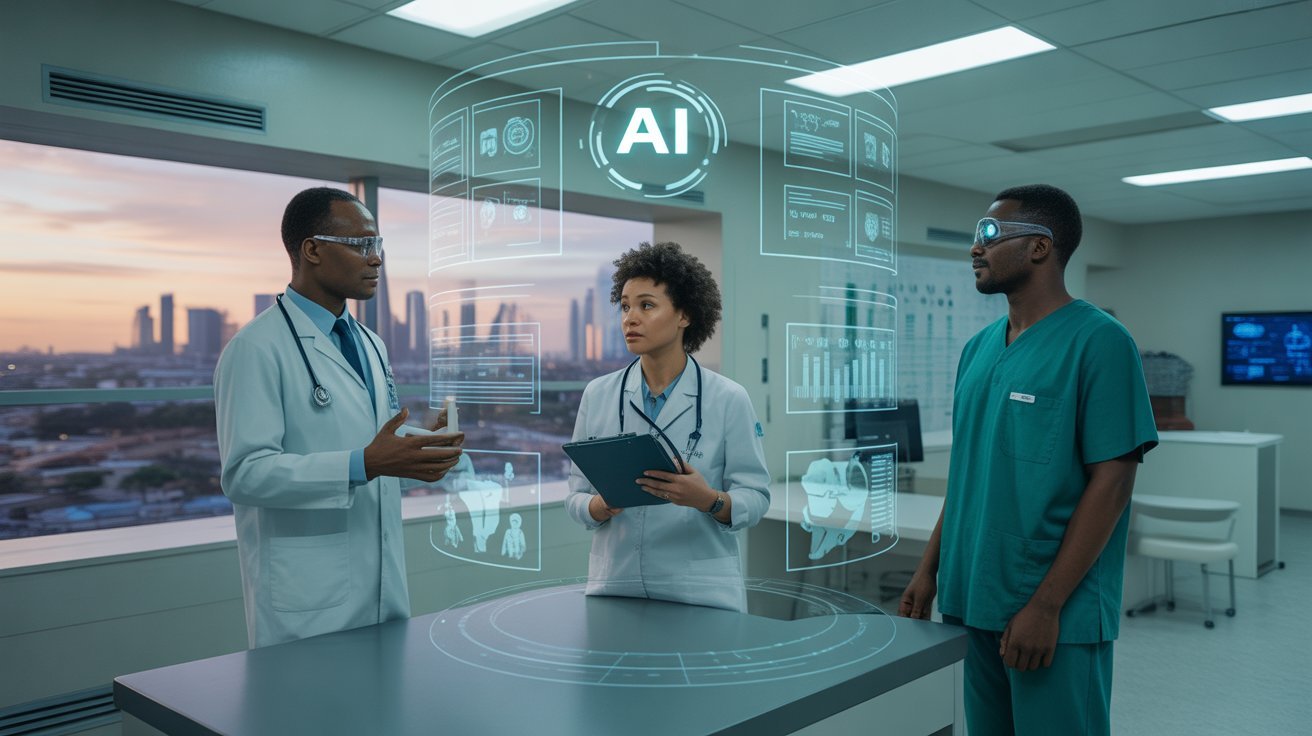
Moreover, the necessity for human oversight cannot be overstated. While AI can enhance diagnostic accuracy and efficiency, it is not infallible. Medical professionals must remain integral to the diagnostic process, utilizing AI as a supportive tool rather than a replacement for human judgment. Establishing a collaborative environment between AI technologies and healthcare providers is crucial to achieving optimal patient outcomes. This collaboration can also aid in navigating ethical dilemmas that arise, fostering discussions around the appropriate use of AI in healthcare.
In light of these concerns, ongoing discussions regarding regulations and governance in healthcare AI are critical. Establishing ethical frameworks ensures that the development and application of AI align with public interest, ultimately contributing to safeguarding patients’ rights and welfare. The future of AI in disease diagnosis and prevention hinges on addressing these challenges collaboratively, maintaining a balance between innovation and ethical responsibility.